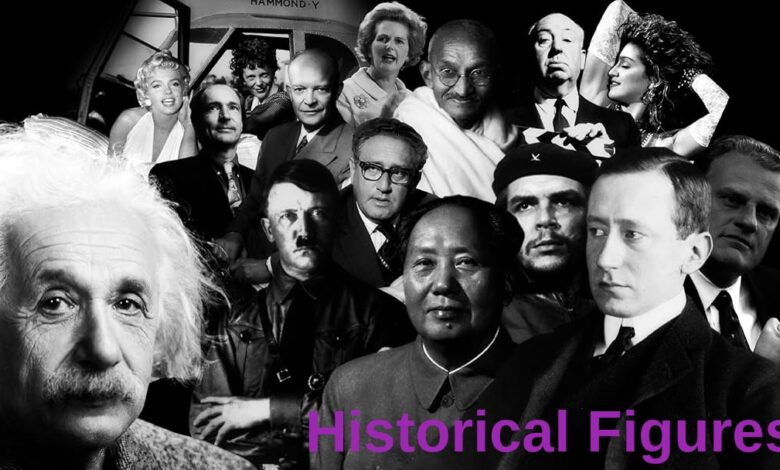
Understanding the Importance of Historical Figures
Historical figures are not just names written in textbooks or carved into statues. They were real people who lived in specific moments, made difficult choices, faced consequences, and in many cases changed the direction of human civilization. When we talk about historical figures, we are really talking about the human side of history — ambition, fear, creativity, courage, and sometimes failure.
What makes historical figures fascinating is that they are both products of their time and forces that shape it. Some rose to power because of social or political chaos, while others challenged the norms of their era and paid a heavy price for doing so. Their lives give us a clearer understanding of why the world looks the way it does today.
Studying historical figures also helps us understand that progress is rarely smooth. It comes through conflict, experimentation, and bold ideas. By examining the lives of influential individuals, we gain insight into how personal decisions can ripple through generations and continents.
Political Leaders Who Redefined Power and Governance
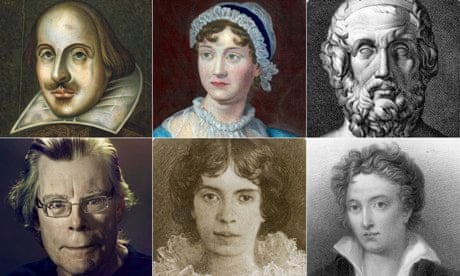
Political historical figures often stand at the center of major global changes. Leaders like Alexander the Great, Abraham Lincoln, and Nelson Mandela didn’t just hold power — they transformed how power was used and understood. Their leadership styles, policies, and moral decisions left long-lasting marks on their nations and beyond.
Alexander the Great expanded his empire across three continents, spreading Greek culture and ideas far beyond their original borders. While his military brilliance is widely praised, his legacy also reminds us how conquest can permanently reshape societies. His empire dissolved after his death, but the cultural fusion he sparked lived on.
Abraham Lincoln, on the other hand, is remembered less for expansion and more for preservation. Leading the United States through a brutal civil war, he faced enormous pressure while making decisions that redefined freedom and equality. His leadership shows how moral clarity during crisis can change the course of a nation’s identity.
Military Figures and the Art of Strategy
Military historical figures are often judged by victories and defeats, but their influence goes deeper than battle outcomes. Figures such as Julius Caesar, Napoleon Bonaparte, and Sun Tzu changed how wars were fought and how leadership was exercised during conflict. Their strategies are still studied today in military academies and leadership programs.
Julius Caesar was not just a general but also a skilled politician. His ability to inspire loyalty among his troops and navigate the complex politics of Rome allowed him to rise to unprecedented power. His assassination became a turning point that ended the Roman Republic and led to imperial rule.
Napoleon Bonaparte demonstrated how intelligence, ambition, and innovation could elevate a man from modest origins to emperor. His military campaigns revolutionized warfare, emphasizing speed, coordination, and adaptability. Even after his defeat, Napoleon’s influence remained through legal reforms and administrative systems still used today.
Thinkers and Philosophers Who Changed How We Think
Not all historical figures ruled nations or commanded armies. Some of the most powerful individuals in history shaped ideas instead of territories. Philosophers and thinkers like Socrates, Confucius, and John Locke influenced how people understand ethics, governance, and human rights.
Socrates challenged people to question their assumptions and seek truth through dialogue. His method of teaching encouraged critical thinking rather than blind acceptance of tradition. Even though he was executed for his ideas, his influence lived on through his students and shaped Western philosophy.
Confucius focused on moral behavior, respect, and social harmony. His teachings emphasized responsibility within families and governments, shaping East Asian cultures for centuries. His philosophy shows how ideas rooted in everyday behavior can create stable societies over long periods of time.
Scientific and Inventive Minds That Advanced Humanity
Scientific historical figures are often the quiet revolutionaries of history. Their discoveries reshaped humanity’s understanding of the universe, health, and technology. Figures like Isaac Newton, Marie Curie, and Galileo Galilei pushed boundaries despite resistance from society or institutions.
Isaac Newton’s work laid the foundation for classical physics, influencing science for hundreds of years. His laws of motion and gravity transformed how people understood nature and inspired generations of scientists. What’s remarkable is how much of modern engineering still relies on principles he discovered centuries ago.
Marie Curie’s contributions to science went beyond discovery. As a pioneer in radioactivity, she opened doors for medical treatments and scientific research while overcoming intense gender discrimination. Her life highlights how perseverance and curiosity can overcome societal limitations.
Cultural and Artistic Icons Who Defined Eras
Artists, writers, and cultural icons are historical figures who shape identity, expression, and collective memory. Figures like Leonardo da Vinci, William Shakespeare, and Frida Kahlo left behind works that continue to inspire across generations and cultures.
Leonardo da Vinci embodied the idea of the “Renaissance man.” His talents in art, science, and engineering showed that creativity and intellect can coexist. His curiosity about the world pushed him to explore anatomy, mechanics, and nature in ways far ahead of his time.
William Shakespeare captured human emotion with unmatched depth. His plays explored love, ambition, jealousy, and power — themes that remain relevant today. His ability to reflect universal human experiences is why his work still resonates centuries later.
Social Reformers and Human Rights Advocates
Some historical figures are remembered not for power or fame, but for standing up against injustice. Social reformers like Mahatma Gandhi, Martin Luther King Jr., and Susan B. Anthony dedicated their lives to equality and human dignity.
Mahatma Gandhi’s philosophy of nonviolent resistance challenged one of the world’s most powerful empires. His belief that moral strength could overcome physical force inspired movements across the globe. His legacy proves that change does not always require violence.
Martin Luther King Jr. articulated the struggle for civil rights with clarity and compassion. His speeches and actions helped shift public opinion and legislation in the United States. His life reminds us that words, when paired with action, can become powerful tools for transformation.
Women in History Who Broke Barriers
For much of history, women’s contributions were overlooked or minimized, yet many female historical figures played crucial roles in shaping societies. Figures like Cleopatra, Joan of Arc, and Rosa Parks challenged expectations and redefined what leadership looked like.
Cleopatra was a skilled political leader who used intelligence and diplomacy to protect her kingdom. Her legacy often focuses on myths rather than her strategic abilities, reflecting how women in history have frequently been misunderstood.
Rosa Parks’ refusal to give up her seat was a simple act with enormous consequences. Her courage sparked a movement and demonstrated how individual actions can ignite widespread change. Her story shows that historical figures are not always powerful by position, but by principle.
The Complex Legacy of Historical Figures
Not all historical figures are easy to admire. Many were deeply flawed, and their actions caused suffering alongside progress. Understanding history honestly means recognizing both achievements and mistakes without oversimplification.
Figures like Christopher Columbus or Winston Churchill are often debated because of their complicated legacies. While they achieved remarkable feats, their actions also led to harm. Studying them critically helps us understand that history is not black and white.
By acknowledging complexity, we avoid glorifying individuals blindly. Instead, we learn to analyze context, motivations, and consequences. This balanced approach allows history to teach lessons rather than promote myths.
Why Historical Figures Still Matter Today
Historical figures continue to influence modern politics, culture, and values. Their ideas shape constitutions, education systems, and social movements. Even today, people look to the past for guidance, inspiration, and cautionary lessons.
Learning about historical figures encourages empathy by placing us in different times and perspectives. It reminds us that progress is driven by people who dared to think differently or act courageously under pressure.
Most importantly, studying historical figures helps us understand our own potential. Their lives show that individuals can make a difference, whether through leadership, creativity, or quiet resistance. History is not just something that happened — it is something humans create.