

How to Steam Vegetables Without a Steamer Basket So, you are ready to crush your meal prep or whip up a healthy side dish, but there is just one tiny hitch. You pull out your broccoli, you look at your stove, and then you realize you do not actually own a steamer basket. Or maybe yours is buried deep in that one kitchen cabinet of doom that you are too terrified to open.
Do not panic, and definitely do not ditch your healthy eating plans for the night. You absolutely do not need a specialized, single-use gadget to get perfectly crisp, vibrant, nutrient-dense veggies. In fact, some of the best professional chefs skip the basket entirely and rely on basic kitchen staples you already have lying around your house.
Steaming is hands-down one of the best cooking methods because it cooks veggies gently using moist heat. This locks in bright colors, keeps things delightfully crunchy, and preserves water-soluble vitamins (like Vitamin C and B vitamins) that usually leach out into the water when you boil them. Here is the ultimate expert guide on how to turn everyday kitchen tools into DIY steaming setups that deliver flawless results every single time.
1. The Aluminum Foil Ball Trick
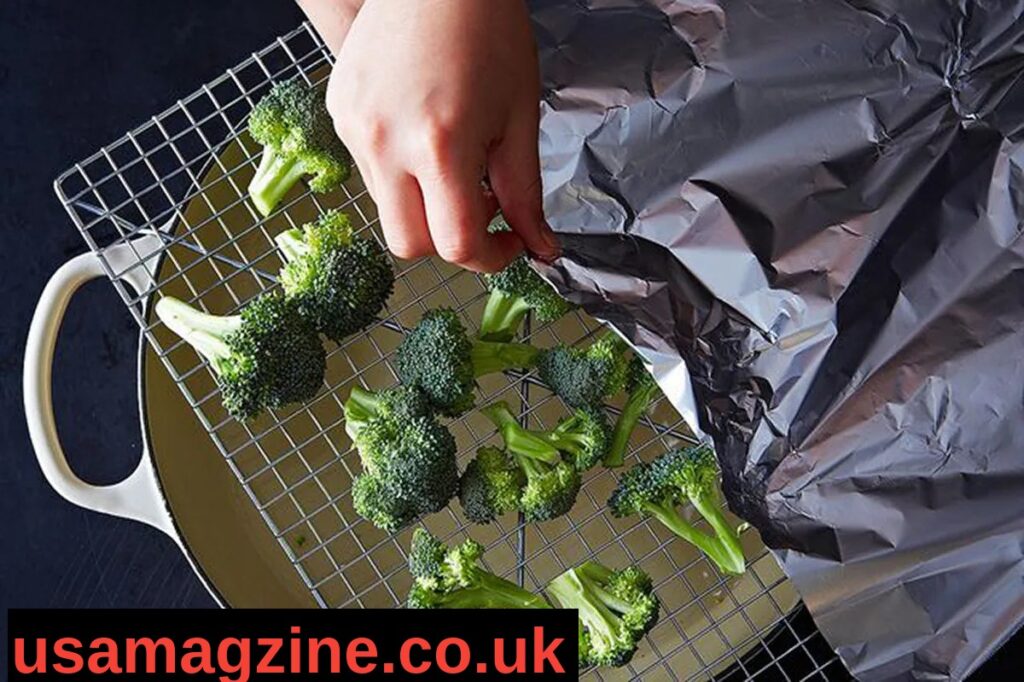
If you have a standard pot with a lid and a roll of aluminum foil, you are officially in business. This is arguably the most clever and accessible hack in the entire culinary playbook. The entire goal of steaming is to elevate your food just above a shallow pool of boiling water, and aluminum foil behaves like the perfect, heat-safe structural support to make that happen.
To set this up, take three or four sheets of aluminum foil and crumple them tightly into balls roughly the size of golf balls or baseballs. Place these foil spheres directly into the bottom of your pot, spacing them out evenly so they create a stable tripod or quad-pod structure. Next, find a heat-resistant ceramic plate or a small pie tin that fits comfortably inside the pot and rest it right on top of those foil balls.
Once your makeshift platform is stable, scatter your chopped How to Steam Vegetables Without a Steamer Basket across the plate. Carefully pour about an inch of water into the bottom of the pot, making absolutely sure the water level sits safely below the edge of the plate—you want to steam your veggies, not boil them. Pop the lid on, crank up the heat to high until the water begins to boil and generate steam, and then turn it down to a medium simmer. This method works beautifully for everything from delicate asparagus to hearty root vegetables because the solid plate prevents smaller pieces from slipping through.
2. The Colander or Sieve Workaround

Take a quick peek inside your cabinets for a metal colander or a fine-mesh stainless steel strainer. If you can find one that fits neatly over the rim of one of your pots, you have just unlocked an incredible makeshift steamer. This method replicates a real How to Steam Vegetables Without a Steamer Basket almost perfectly because the perforated metal allows steam to circulate freely around every single piece of food.
The trick here is all about matching sizes. Find a pot that allows your colander or sieve to sit comfortably inside the rim without dropping all the way to the very bottom. You want to leave a generous gap of at least two to three inches at the base of the pot. Pour an inch or two of water into the pot, ensuring the bottom of the colander stays dry when it is resting in place.
Dump your prepared How to Steam Vegetables Without a Steamer Basket into the colander, spread them out to maximize surface area, and turn on the heat. Now, because colanders often stick out above the rim of the pot, your standard lid might not fit tightly. Don’t let that steam escape! Simply invert a large metal mixing bowl over the top of the colander, or wrap the whole setup tightly with a layer of heavy-duty aluminum foil to trap that precious moisture. It is an elegant, high-efficiency solution that cooks food incredibly evenly.
3. The Classic Microwave Steam Hack
Purists might sniff at the microwave, but food scientists and kitchen experts know a secret: the microwave is actually an absolute powerhouse for steaming How to Steam Vegetables Without a Steamer Basket. It works by exciting the water molecules inside the food itself, creating ultra-fast internal steam while preserving brilliant color and crunch. When done correctly, it is faster than waiting for a massive pot of water to boil on the stove.
To pull off a flawless microwave steam, grab a large, microwave-safe glass or ceramic bowl. Toss in your chopped vegetables—this works brilliantly with broccoli florets, sliced carrots, and green beans. Add a tiny splash of water to the bottom of the bowl; you only need about two to three tablespoons because the veggies will release their own moisture as they heat up.
The real secret lies in how you seal it. Cover the bowl tightly with a microwave-safe ceramic plate or a layer of plastic wrap (just leave a tiny, microscopic gap at one edge to act as a steam vent so things don’t get messy). Pop it in the microwave and run it on high for two to four minutes, depending on how firm you like your veggies. When you pull it out, be incredibly careful removing the cover—that trapped steam is incredibly hot and will give you a nasty burn if you aren’t paying attention.
4. The Splatter Screen Method
If you love pan-frying foods without making a total mess of your stovetop, you probably have a metal mesh splatter screen tucked away with your baking sheets. Most people view this as a purely defensive tool against flying oil, but it actually pulls double duty as an exceptional flat-top steaming platform for larger, longer How to Steam Vegetables Without a Steamer Basket.
To utilize this technique, grab a wide, shallow skillet or pan and fill it with roughly an inch of water. Place your splatter screen directly over the top of the skillet. Because the screen is completely flat, you can lay out long ingredients like whole stalks of broccoli, Chinese broccoli, large asparagus spears, or even halved bok choy in a gorgeous, single layer.
Once your veggies are laid out, you need to trap the steam rising up through the mesh. You can do this by placing a large dome lid, an inverted roasting pan, or a big metal bowl directly over the How to Steam Vegetables Without a Steamer Basket on top of the screen. Bring the water below to a rolling boil. The steam rises uniformly through the micro-mesh, cooking the vegetables with incredible precision while keeping them perfectly flat and easy to flip or rearrange if necessary.
5. The Skillet Pan-Steaming (Emulsion) Technique
This is the ultimate professional restaurant shortcut. Chefs often don’t have the time or space to pull out dedicated steaming equipment for a single side dish, so they rely on a technique called pan-steaming. It combines a tiny bit of shallow boiling with immediate steaming, and it creates a gorgeous, glossy finish on the How to Steam Vegetables Without a Steamer Basket that makes them look like they came straight out of a food magazine.
Grab a wide skillet with a tight-fitting lid. Place your vegetables directly into the dry skillet in a relatively even layer. Next, pour in just enough water to fill the pan about a quarter-of-an-inch deep. To take this to an expert level, toss in a small pat of butter or a drizzle of high-quality olive oil along with a pinch of kosher salt and cracked black pepper right into the water.
Put the lid on tight and crank the heat up to maximum. The water will rapidly boil, trapping hot steam under the lid and cooking the How to Steam Vegetables Without a Steamer Basket in record time. Keep a close eye on it; after about three to five minutes, the veggies will be tender-loam, and the water will have mostly evaporated. What is left behind is a beautiful emulsion of the remaining moisture and the fat you added, creating a built-in, flavorful glaze that clings to your perfectly steamed veggies.
Quick Facts: Veggie Steaming Reference Guide
| Vegetable Type | Best DIY Method | Water Amount | Cook Time (Minutes) | Expert Pro Tip |
| Broccoli & Cauliflower | Colander or Microwave | 1 inch / 2 tbsp | 3 – 5 mins | Cut florets into uniform sizes so they cook at the identical rate. |
| Asparagus & Bok Choy | Splatter Screen or Skillet | 1/4 inch to 1 inch | 2 – 4 mins | Snap off woody bottoms; lay flat to avoid mushy tops. |
| Carrots & Root Veggies | Aluminum Foil Balls | 1 inch | 6 – 9 mins | Slice thin or into coins to speed up the steaming process significantly. |
| Green Beans & Peas | Microwave or Skillet | 2 tablespoons | 2 – 3 mins | Shock in ice water immediately after steaming to lock in bright green. |
Frequently Asked Questions (FAQ)
Can you steam vegetables in a regular pot without any tools?
Yes, absolutely! This is best done using the skillet pan-steaming method. By adding just a tiny amount of water (about a quarter-of-an-inch) to a pot or pan with a tight lid, the water boils off rapidly and creates enough trapped steam to cook the vegetables without drowning them or boiling out their nutrients.
How do I know when my steamed vegetables are done?
The easiest way to check is with the fork test. Your vegetables should be “fork-tender,” meaning a fork can easily pierce the thickest part of the vegetable with just a little bit of resistance. Visually, look for colors that are incredibly vibrant and bright. If your green veggies start turning an army-drab, yellowish-brown color, they are officially overcooked.
Is it safe to use aluminum foil for steaming?
Yes, using aluminum foil crumpled into balls to support a plate is perfectly safe for steaming. Aluminum foil is highly heat-resistant and won’t melt or release harmful toxins at standard boiling temperatures (212°F / 100°C). Just ensure the plate you place on top is completely oven-safe or heat-resistant ceramic.
Why are my steamed vegetables coming out mushy?
Mushy vegetables are always the result of overcooking or letting the How to Steam Vegetables Without a Steamer Basket sit in direct contact with boiling water. To fix this, make sure your DIY platform keeps the food completely elevated out of the liquid, keep your cooking times short, and pull the veggies off the heat the moment they hit that sweet spot of bright, crisp-tender perfection.
YOU MAY ALSO READ: Justin Nunley Cancer: Separation of Fact from Rumor in Social Media Health Trends
