

Introduction
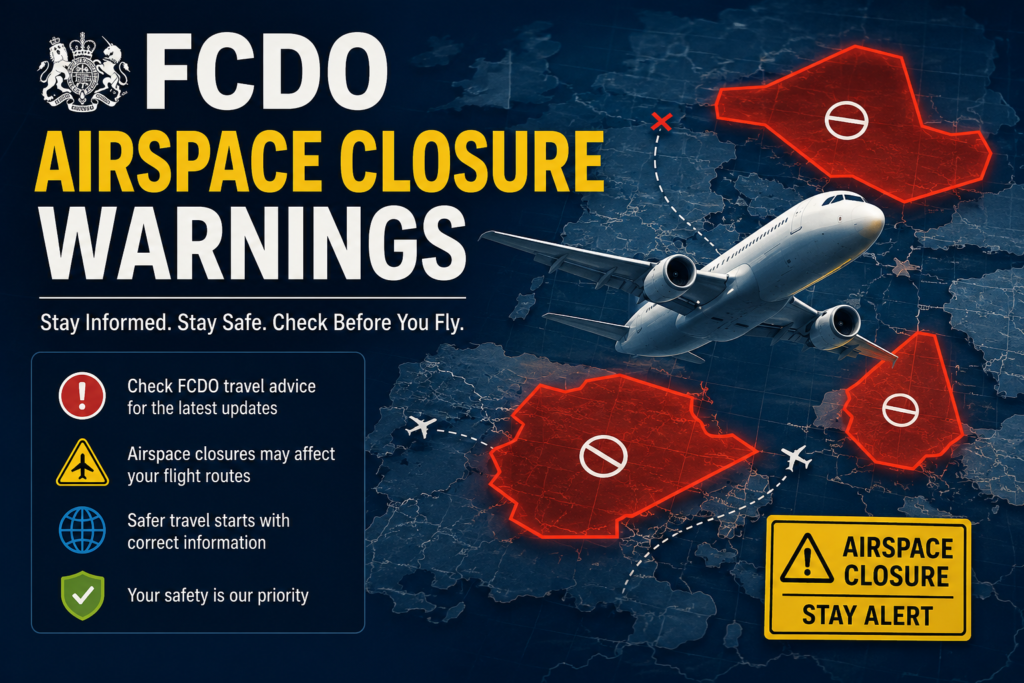
FCDO Airspace Closure Warnings have become one of the most searched travel topics in recent years as geopolitical tensions, military conflicts, severe weather, volcanic activity, and security threats continue to affect international aviation. Whether you are planning a holiday, a business trip, or returning home, understanding how these warnings work can help you avoid unexpected delays, cancellations, and safety risks.
The UK Foreign, Commonwealth & Development Office (FCDO) regularly updates its travel advice to inform British nationals about safety concerns in different countries. Airspace closures can occur with little notice, affecting commercial airlines, cargo flights, and private aircraft. Travelers should always check the latest guidance before departure and remain flexible if their itinerary changes.
This guide explains what FCDO Airspace Closure Warnings mean, why they happen, how they affect passengers, and what practical steps you should take before flying.
What Are FCDO Airspace Closure Warnings?
FCDO Airspace Closure Warnings are official travel advisories issued when airspace over a particular country or region becomes unsafe or inaccessible due to security concerns or operational risks.
These warnings help travelers understand potential disruptions, including:
- Flight cancellations
- Flight diversions
- Airport closures
- Delayed departures
- Restricted airspace
- Emergency travel changes
Although airlines make operational decisions independently, FCDO advice provides valuable information that travelers should consider before booking or departing.
Why Does Airspace Get Closed?
Airspace may be temporarily or indefinitely restricted for several reasons.
Military Conflict
Armed conflicts are one of the most common reasons for airspace closures. Civil aviation authorities may prohibit flights to protect passengers and crew from potential risks.
Political Instability
Sudden political unrest or civil disturbances can lead governments to restrict flights into affected areas.
Severe Weather
Extreme weather events such as hurricanes, powerful storms, dense ash clouds, or widespread flooding may make flying unsafe.
Volcanic Activity
Volcanic eruptions release ash that can damage aircraft engines. Airlines often reroute or suspend flights until conditions improve.
Security Threats
Governments may close airspace because of terrorism concerns, drone activity, missile threats, or unidentified security risks.
How Airspace Closures Affect Travelers
When airspace closes unexpectedly, passengers may experience several challenges.
These include:
- Cancelled flights
- Longer travel routes
- Additional layovers
- Missed connecting flights
- Hotel booking changes
- Increased travel expenses
International airlines often reroute flights around restricted zones, increasing overall flight times.
Countries That May Experience Airspace Restrictions
Although every situation is different, airspace restrictions have previously affected regions experiencing:
- Armed conflicts
- Border disputes
- Military exercises
- Political crises
- Natural disasters
- Aviation emergencies
Travel conditions can change quickly, making it essential to monitor official travel advice before departure.
What Should You Do Before Flying?
Preparing properly can reduce travel disruptions.
Check Travel Advice
Always review the latest government travel advice before booking flights.
Monitor Airline Updates
Airlines usually notify passengers immediately if schedules change.
Purchase Travel Insurance
A comprehensive travel insurance policy may cover cancellations, delays, accommodation, or emergency expenses depending on your policy.
Keep Important Documents Ready
Carry both printed and digital copies of:
- Passport
- Visa
- Travel insurance
- Flight confirmations
- Emergency contact details
How Airlines Respond to Airspace Closures
Commercial airlines use sophisticated flight planning systems to avoid unsafe areas.
Possible responses include:
- Flight rerouting
- Temporary suspension
- Alternative airports
- Schedule adjustments
- Passenger rebooking
Safety remains the highest priority for airlines worldwide.
Can You Still Travel During Airspace Restrictions?
Sometimes yes.
Not every warning means all flights stop completely.
Possible situations include:
- Flights operating on alternative routes
- Limited airport operations
- Additional security procedures
- Longer flight durations
Travelers should remain flexible and allow extra time for unexpected changes.
Tips for International Travelers
If your destination has active FCDO Airspace Closure Warnings, consider these practical tips:
- Arrive early at the airport.
- Enable airline notifications.
- Monitor weather forecasts.
- Keep emergency funds available.
- Charge electronic devices.
- Download boarding passes.
- Save hotel contact information.
- Inform family members about your itinerary.
Preparation can make unexpected disruptions easier to manage.
London Travel Tips for Summer 2026
Many international travelers connect through London before continuing to destinations around the world. During the summer travel season, airports such as Heathrow, Gatwick, Stansted, and Luton are typically busier than usual, so arriving at least three hours before international departures is recommended.
Visitors spending time in London while waiting for connecting flights can explore popular attractions including Buckingham Palace, the Tower of London, the British Museum, Hyde Park, Covent Garden, and the South Bank. The city also hosts seasonal festivals, open-air theatre performances, and sporting events during the summer months, making it an attractive stopover destination.
Public transport provides convenient access to most attractions through the London Underground, Elizabeth Line, buses, and National Rail services. Travelers should use contactless payment cards or Oyster cards for quick and efficient journeys.
Frequently Asked Questions
What is an FCDO Airspace Closure Warning?
It is an official travel advisory informing travelers about safety concerns affecting specific airspace or destinations.
Do all airspace warnings cancel flights?
No. Some flights may continue using alternative routes while others may be delayed or cancelled depending on airline operations.
Can airlines fly around closed airspace?
Yes. Airlines often reroute flights to avoid restricted areas when safe and operationally practical.
Should I cancel my trip?
That depends on the destination, airline policies, travel insurance, and the latest official travel advice.
Will travel insurance cover cancellations?
Coverage depends on your insurance policy and the reason for disruption. Always review your policy before traveling.
Final Thoughts
FCDO Airspace Closure Warnings play an important role in helping travelers make informed decisions before flying. Airspace restrictions can occur because of military conflicts, severe weather, political instability, or other security concerns. While these events may disrupt travel plans, staying informed, monitoring airline updates, purchasing suitable travel insurance, and preparing alternative plans can significantly reduce inconvenience.
Before every international journey, check the latest travel advice, remain flexible with your schedule, and prioritize safety over convenience. Being prepared ensures you can respond confidently if travel conditions change unexpectedly.